Iran Strikes: Why Trump Acted & What US Intel Really Says
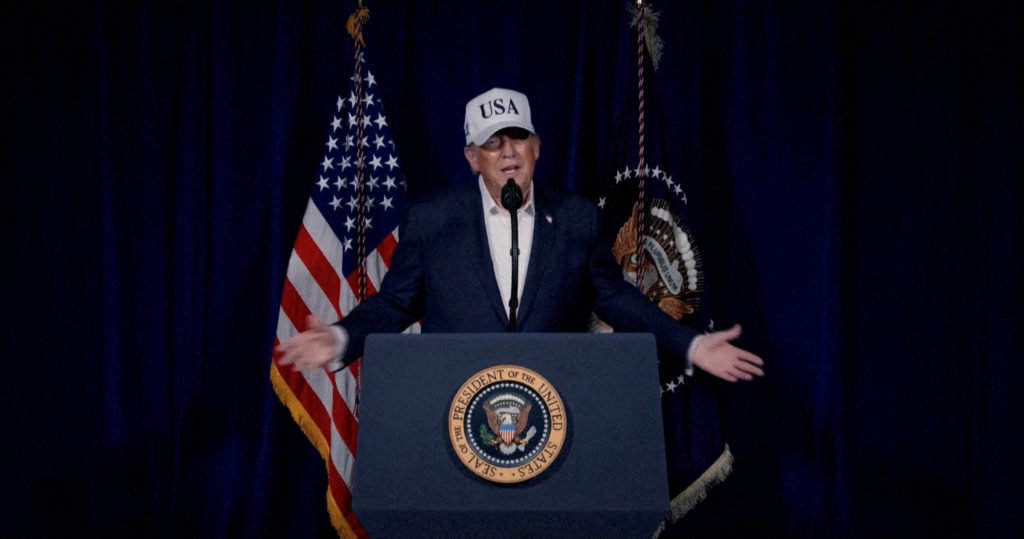
In a dramatic turn of events, President Donald Trump announced a significant military operation against Iran, igniting widespread debate and raising urgent questions about the rationale behind such a decisive move. The Trump's Iran Strikes: Justifying "Imminent Threats" and Regime Change, detailed in an eight-minute video statement from his Mar-a-Lago resort, laid bare the administration's resolve to counter what it described as an escalating threat from Tehran. This comprehensive overview delves into the core of Trump's justification, scrutinizes what US intelligence genuinely indicated, and explores the broader geopolitical implications.
The president's message was unequivocal: "They will never have a nuclear weapon." This central tenet framed the entire operation as a preventative measure, but the specifics of its timing and the immediate threats cited have been subjects of intense scrutiny. As the world reacted to the trump statement latest, analysts grappled with the discrepancies between the White House's public assertions and the intelligence community's assessments.
Unpacking Trump's Rationale: The "Imminent Threat" Argument
At the heart of President Trump's justification for the Iran strikes was the assertion of "imminent threats." From his statement, the objective was clear: "Our objective is to defend the American people by eliminating imminent threats from the Iranian regime, a vicious group of very hard, terrible people. Its menacing activities directly endanger the United States, our troops, our bases overseas, and our allies throughout the world." These powerful words served to underscore the urgency and necessity of the military action, particularly in the absence of formal international backing or Congressional authorization.
However, the concept of "imminent threat" as presented by Trump encompassed a broader historical sweep and forward-looking projections that diverged significantly from conventional interpretations and intelligence assessments. Trump articulated three primary cases to bolster his argument:
- A Historical Threat: He contended that Iran has posed an imminent threat to America ever since the Islamic Revolution in 1979, framing the current action as a response to decades of hostile behavior.
- ICBM Development: The president claimed Iran was on the verge of developing intercontinental ballistic missiles capable of reaching the US. This specific assertion, however, was not supported by US intelligence assessments, creating a critical point of divergence.
- Nuclear Weapon Development: Trump also stated that Iran was close to developing a nuclear weapon, a claim that contradicted his own prior statements from the previous summer, where he had suggested Iran's capabilities had been "obliterated" after earlier US strikes.
The timing of the strikes also raised eyebrows. While the administration cited specific threats, the underlying geopolitical reality suggested a more opportunistic moment. Both President Trump and Israeli Prime Minister Netanyahu reportedly viewed the Iranian leadership as being at its weakest point domestically in years. Tehran's brutal crackdown on internal protests and the decimation of its allied militias following the Gaza war were seen as critical vulnerabilities. This perceived weakness, rather than a sudden spike in immediate threats, appeared to serve as a significant catalyst, leading them to believe that this was the opportune moment to strike.
Adding another layer of complexity to the intelligence landscape, reports surfaced that Trump downplayed the importance of Russia reportedly sharing intelligence with Iran to help it target US assets. This could indicate either a lack of concern, a strategic dismissal, or a differing interpretation of the threat posed by such intelligence sharing, further complicating the public's understanding of the "imminent threat" claims.
The Nuclear Ambition & Failed Diplomatic Paths
A cornerstone of the trump statement latest on Iran was the unequivocal declaration: "They will never have a nuclear weapon." This objective has been a consistent theme in US foreign policy, albeit pursued through dramatically different strategies across administrations. President Trump argued that the US had exhausted all diplomatic avenues, leaving military action as the only recourse due to a "recalcitrant Iranian regime."
Trump’s narrative suggested a history of good-faith attempts by Washington to negotiate an end to Iran's nuclear program, only to be met with Iranian intransigence. "We sought repeatedly to make a deal. We tried. They wanted to do it. They didn't want to do it again. They wanted to do it. They didn't want to do it," he stated, implying Iran's mercurial approach to negotiations. He further claimed that Tehran "wouldn't give us what we have to have" on the eve of the attack, painting a picture of an uncooperative adversary forcing the US's hand.
However, the diplomatic track under the Trump administration was far from straightforward. The president himself had a fluctuating stance on the extent of his demands from Tehran. At times, he insisted that any deal must include an end to Iran's conventional missile capabilities, a demand Iran consistently rejected as non-negotiable for its national security. At other times, he softened this stance, only to ultimately converge on a strict red line: zero nuclear enrichment by Iran. This demand was widely seen by Tehran as a humiliation, a complete reversal of the concessions made under the Joint Comprehensive Plan of Action (JCPOA), from which Trump had unilaterally pulled the US in his first term.
Despite the public rhetoric of failed negotiations, mediated talks between the US and Iran were, in fact, due to continue the following week, with Oman acting as a key facilitator. Reports on Friday, just prior to the strikes, even suggested a breakthrough was within reach, with Iran reportedly offering to cease the stockpiling of nuclear material. This potential concession, a significant de-escalation, appeared to have been overlooked or dismissed by Trump, who "balked" at the opportunity, choosing instead the path of military action. For a deeper dive into the specifics, consider exploring Trump's Iran Statement: Unpacking Nuclear Goals & Failed Deals.
Beyond the Headlines: Analyzing US Intelligence & Geopolitical Chess
The disparity between President Trump's public statements regarding Iran's capabilities and the assessments provided by the US intelligence community represents a critical facet of this crisis. While Trump asserted Iran was close to developing intercontinental ballistic missiles (ICBMs) capable of reaching the US, and on the verge of developing nuclear weapons, US intelligence assessments reportedly did not support the ICBM claim and presented a more nuanced picture of Iran's nuclear program. This divergence underscores the complexities of interpreting intelligence and how different political leaders might utilize or interpret such information to justify policy decisions.
Understanding Intelligence vs. Policy: It’s crucial for the public to differentiate between raw intelligence findings and how those findings are interpreted and presented by political leadership. Intelligence agencies collect data, analyze threats, and provide assessments based on their best judgment. Policy makers then use these assessments (among other factors) to formulate strategies. In this instance, the "imminent threat" rationale appeared to be shaped more by a perceived strategic window of opportunity—Iran's domestic weakness post-Gaza and internal protests—than by a sudden, verified, and unavoidable immediate danger to the US homeland.
Geopolitical Calculations: The decision to strike also fits into a larger geopolitical chess game. The notion that Iran's leadership was at its weakest point domestically for years, with its allied militias in the region reportedly decimated, presented a unique moment. From this perspective, the strikes could be seen as an attempt to capitalize on this vulnerability, potentially to force a more compliant regime or to degrade Iran's capabilities at a moment of perceived strategic advantage. This strategy, however, carries inherent risks, including unintended escalation or further destabilization of an already volatile region.
Fact Check: Congressional Authorization: A key aspect of US foreign policy dictates that significant military actions, especially those not directly in response to an attack on US forces, require Congressional authorization. The fact that Trump's strikes proceeded without such backing highlights a contentious area of executive power and a risk to the constitutional balance of power. The commander-in-chief needs to provide a compelling justification for such unilateral action, and "imminent threats" is often the legal gateway for avoiding Congressional approval.
The Road Ahead: Risks and Regional Dynamics
The repercussions of the Iran strikes announced in the trump statement latest are far-reaching, ushering in a period of heightened uncertainty and risk in the Middle East and beyond. While the immediate objective may have been to deter Iran and eliminate perceived threats, the long-term consequences could be substantial and unpredictable.
One of the most immediate concerns is the potential for Iranian retaliation. Tehran possesses various means to respond, including its network of proxy militias across the region, cyber warfare capabilities, and direct conventional military action against US assets or allies. Any retaliatory strike could trigger a dangerous cycle of escalation, leading to a broader regional conflict with devastating humanitarian and economic consequences.
The strikes also carry significant implications for regional stability. US allies in the Middle East, such as Israel and Saudi Arabia, will undoubtedly be on high alert. The prospect of increased tensions could disrupt vital shipping lanes, impact global oil markets, and further destabilize countries already grappling with internal conflicts and political fragility. The call for "regime change" in Tehran, implicit in Trump's statement, adds another layer of complexity, suggesting a maximalist goal that could entail a prolonged and costly engagement.
Internationally, the US actions without formal backing from allies or the UN Security Council could further strain diplomatic relations and challenge the existing international order. It raises questions about the precedent set for unilateral military intervention and the erosion of multilateral approaches to global security challenges. The path forward remains precarious, demanding careful diplomacy, de-escalation efforts, and a clear understanding of all parties' red lines to prevent a catastrophic wider war.
The trump statement latest on Iran's strikes marked a critical juncture in US foreign policy, reflecting a blend of specific threat perceptions, strategic calculations, and a clear commitment to preventing Iranian nuclearization. While President Trump's narrative centered on "imminent threats" and failed diplomatic efforts, a closer look reveals a more intricate picture involving disputed intelligence assessments, strategic timing influenced by Iran's domestic vulnerabilities, and a unilateral approach that bypassed traditional international and domestic approvals. As the region braces for potential repercussions, the world watches to see how this high-stakes geopolitical chess match will unfold, highlighting the enduring complexities of power, diplomacy, and conflict in the 21st century.